IT / HARDWARE BUILD
Custom Gaming Console
A custom-built gaming console: the parts chosen, the build itself, and the software setup that makes it playable.
CONSOLE BUILD
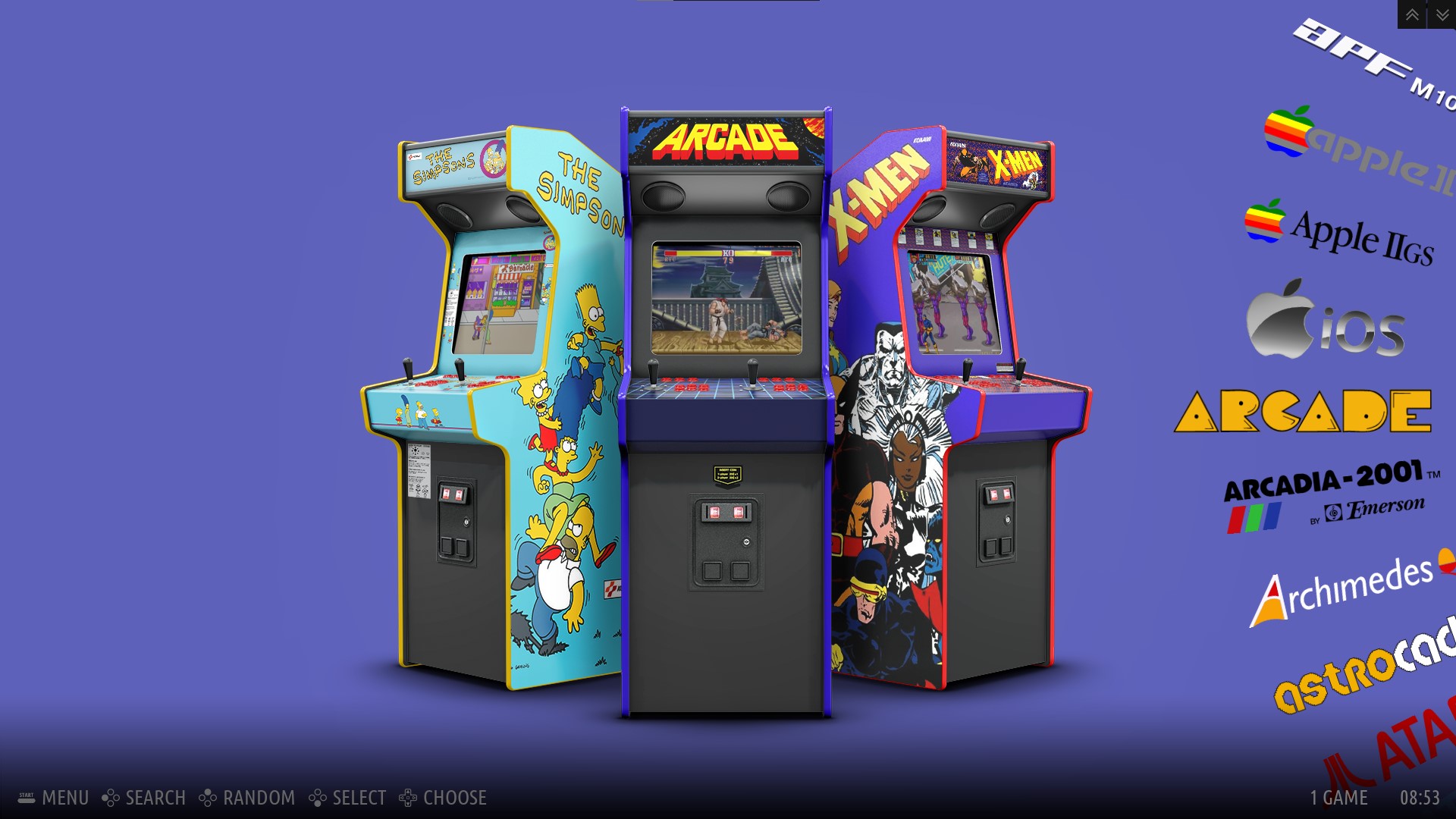
A birthday present for my nephew: a mini PC turned into a retro console. It runs Bazzite, a SteamOS-style Linux distribution, and boots straight into RetroBat, an open-source front-end that manages the emulators and reads a library of ROM and ISO files. The PC behaves like a modern console from a controller. It can also stream heavier games from a more capable machine.
 ×

RetroBat and the emulator stack
RetroBat is the open-source front-end emulation software for retro and modern consoles. It supports more than 230 console and arcade emulations, reads ROM and ISO files, and pulls in artwork and metadata for each game. Configured systems used in this project include the NES, N64, the Game Boy family through the Nintendo 3DS, SEGA consoles, PlayStation and PlayStation 2, Dreamcast, MAME arcade machines, and a pile of obscure arcade systems. The interface itself uses the Ckau-Book theme, a book-style layout with artwork for more than 477 systems.
Local or streamed
Games can run locally or through SteamOS, which opens the door for remote rendering. Low-demand titles play directly on the mini PC; heavier emulation runs on a stronger machine and streams the video to the entertainment system. A single entertainment system that can run locally, or use any connected computer to stream anything to it.
The console experience
The goal was for it to feel like a modern console, not a PC with emulators bolted on. Booting directly into RetroBat, browsing by system, and doing everything from a controller gets it there. The build was a birthday gift for my nephew, which means it has to work out of the box. It had to work on the first try and be obvious to use without instructions.
Why this stack
Both pieces are open source and free to use. RetroBat is portable and configures the emulators once, then keeps the library organized; Bazzite provides a console-like base that still benefits from Linux updates and Steam integration. Together they turn a small, inexpensive PC into something that behaves like hardware several times its price.